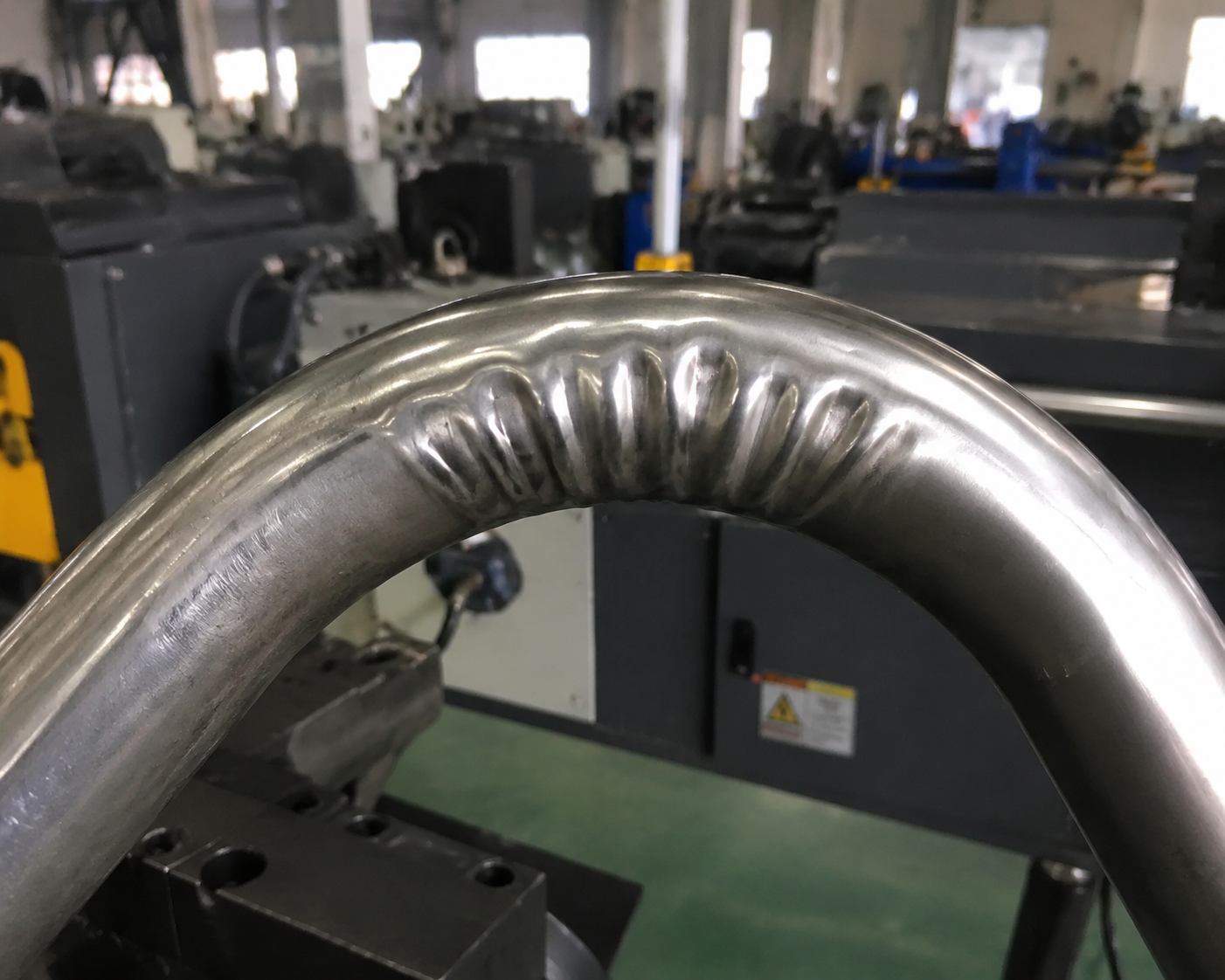

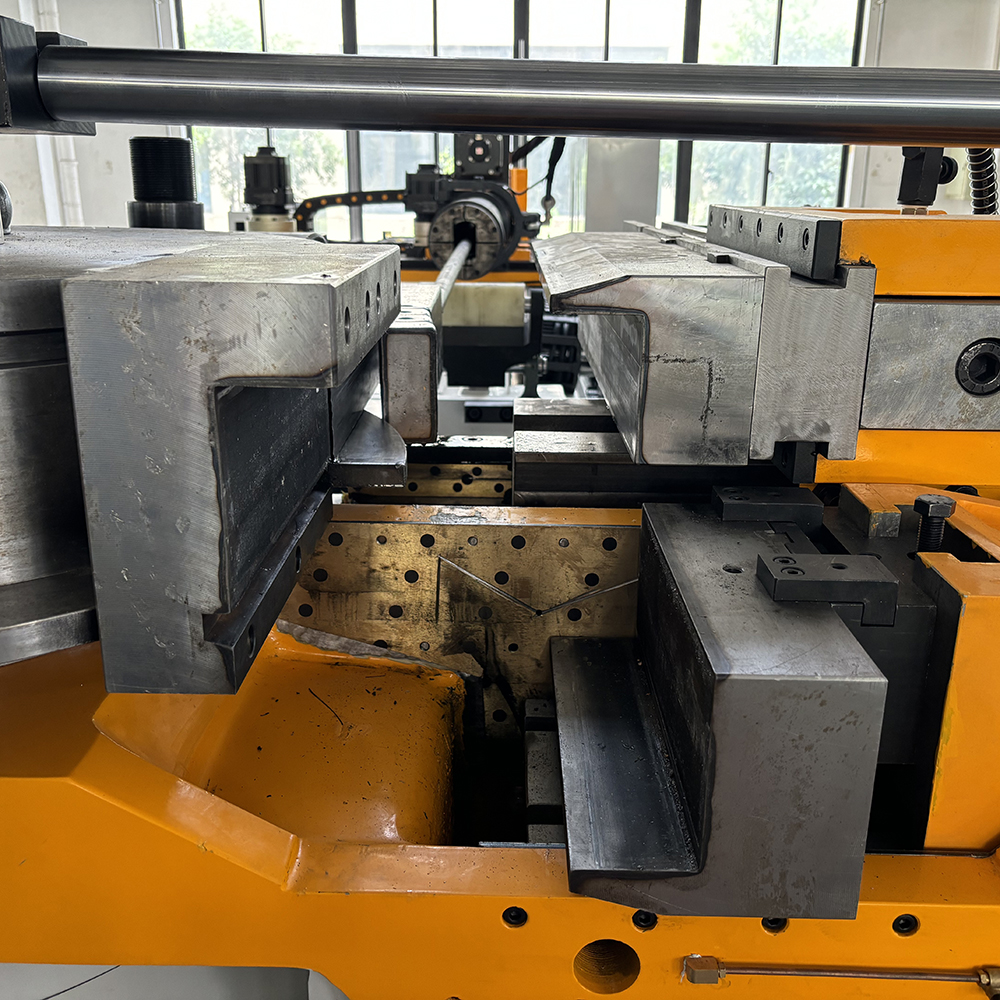
Pipe Bending Machine That Bends Metal Pipes Into Various Shapes

CNC Pipe Bending Machine: Driven by a servo motor, the bending action is precisely controlled by a computer digital control system, which can achieve high-precision bending.

Hydraulic Pipe Bending Machine: using a hydraulic system to provide power, with strong power and easy operation, it can complete a series of actions such as hydraulic drive, clamping, unclamping, and pipe bending.

Fully automatic Pipe Bending Machine: an automated equipment that integrates an electromechanical hydraulic system. The automatic pipe bending machine control system, composed of a servo motor and its motion control unit PLC, and a touch screen, can independently complete pipe bending and forming, which is suitable for large-scale and high-efficiency production.

Working Principle

Through the principles of electricity, hydraulic pressure, air pressure, etc., the metal pipe is placed in the mold of the bending machine head, the control button is operated to rotate the bending machine head to the corresponding angle, and the mold on the workbench is acted on by hydraulic or air pressure to make the metal pipe bend and deform.

Structural composition

Mainly includes pipe bending machine frame, bending machine head, hydraulic system, electrical control system, and other parts. Some pipe bending machines are also equipped with mandrels to support the inner wall of the bending radius of the conduit to prevent its deformation.

Operation process

Preparation: Select the appropriate pipe bending machine model and mold according to the pipe material, pipe diameter, and bending requirements, check the equipment status, and clean the pipe surface.

Pipe clamping: Place the pipe accurately in the pipe bending machine fixture to ensure firmness and precise position.

Parameter setting: Set appropriate bending speed, force, and other parameters according to pipe specifications and bending angle requirements.

Bending operation: Start the pipe bending machine and bend slowly. Pay attention to the deformation of the pipe during the process and control the feed speed.

Quality inspection: After bending, check whether the bending angle, roundness, surface quality, etc., meet the standards.

Subsequent processing: Clean and sort the qualified pipes.

Application field

Widely used in power construction, road and railway construction, bridges, ships, furniture, decoration, air conditioning, automobiles, and other fields.

Your Satisfaction is Our Success

If You Are Looking For Related Products Or Have Any Other Questions Please Feel Free To Contact Us.

Please enable JavaScript in your browser to complete this form.
=

Related News

What Is Mandrel Bending?

What Is Mandrel Bending?

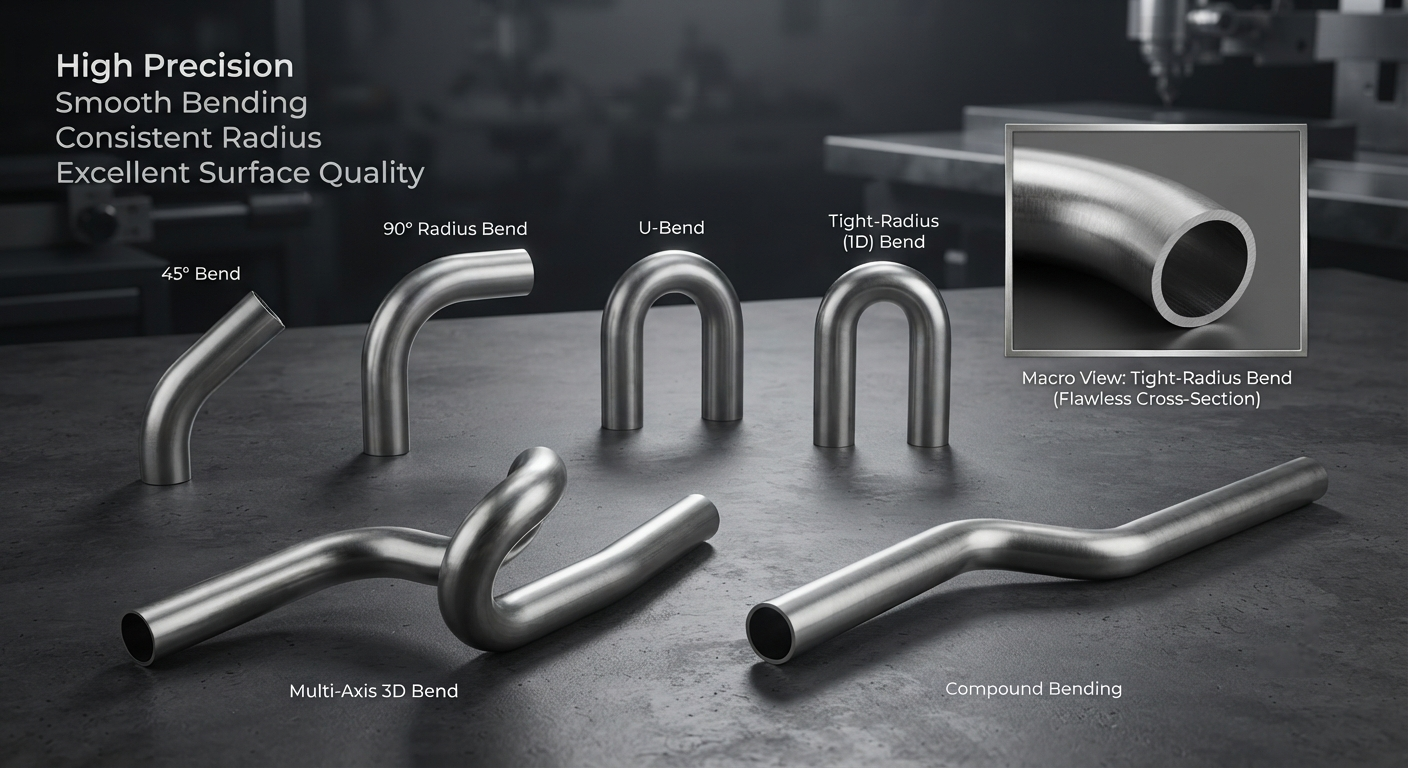
Mandrel bending is a precise tube bending process that uses an internal mandrel to support the tube during the bending operation. It reduces wrinkling, flattening and ovality and is therefore ideal for thin-wall tubes and tight radius bends.

Mandrel bending is common in automotive, aerospace, HVAC, furniture and industrial applications.
Read More »
What Is Rotary Draw Bending?

What Is Rotary Draw Bending?

Among the modern manufacturing methods for tube bending, rotary draw bending (RDB) is one of the most accurate and most widely used. It is commonly used to make high quality bends in stainless steel, aluminum, carbon steel and copper tubing. Rotary draw bending is widely used in the automotive, aerospace, furniture, HVAC and medical equipment industries due to its excellent precision and repeatability.

Read More »